
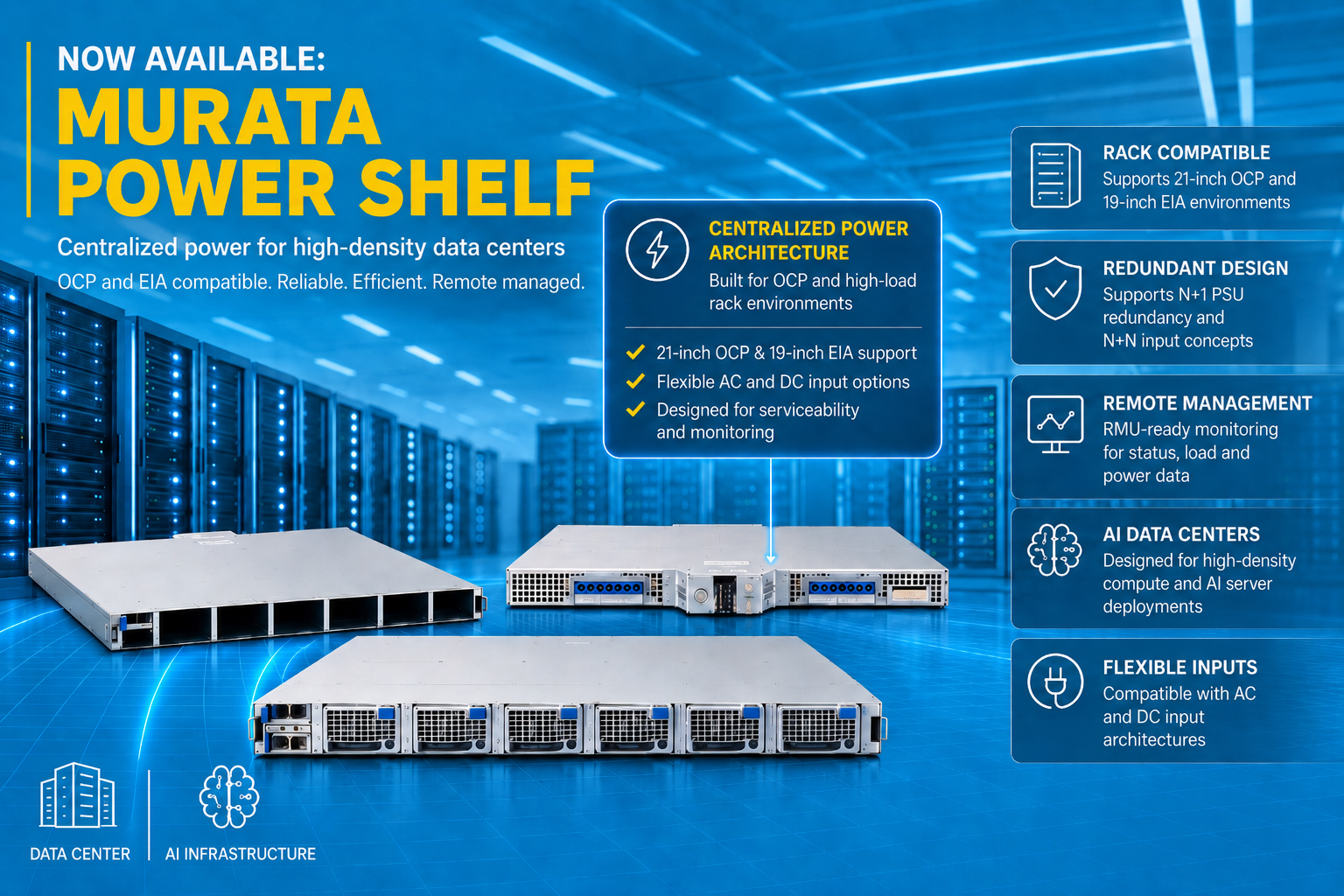
Murata Power Shelf Solutions for OCP and High-Density Data Centers
Data center power architecture is changing because rack power density is rising, AI server deployments are becoming more common, and operators want power systems that can be maintained without turning every rack into a custom engineering project. The Murata Power Shelf portfolio page at VitecPower is useful in that context because it focuses on centralized power supply systems for data centers that are compatible with Open Compute Project infrastructure. The current VitecPower product text describes a shelf that integrates and houses power supply units and remote management units, supports both 21-inch OCP and 19-inch EIA rack environments, and is intended for high-load rack designs with flexible redundancy.
That positioning matters for technical buyers as much as for electrical engineers. A power shelf is not simply a metal tray. It becomes the mechanical, electrical, service, and monitoring boundary between the rack-level power architecture and the individual power supply modules that keep servers and accelerator platforms online. In a conventional distributed design, power conversion may be spread across many server power supplies. In a centralized architecture, the shelf and its PSUs can operate in a higher load range, while redundancy and service access are planned at the rack or shelf level. The result can be a cleaner operational model when the surrounding rack design, protection, airflow, monitoring, and service process are engineered correctly.
Why the shelf is a system decision
The VitecPower page highlights Murata power shelves for centralized power supply systems that install high-efficiency PSUs and remote management units together. This is a system decision because the shelf influences the whole rack layout. Engineers need to consider rack width, input feed strategy, output bus architecture, PSU population, redundancy targets, monitoring access, and physical service workflows. A shelf that fits both 21-inch OCP specifications and 19-inch EIA installations can be attractive for operators that want to bridge newer open compute concepts with existing data center infrastructure, but the final fit still depends on the rack standard and the facility design.
Centralized power also changes the way teams think about load range. The VitecPower data center copy explains that centralized power supply systems can enable PSUs to operate in a higher load range compared with conventional distributed power supply systems. That is important because power supplies usually have an efficiency curve rather than one fixed efficiency point. Running hardware closer to the intended operating range can help the overall conversion strategy, provided redundancy, thermal margin, and uptime requirements are preserved. This is why the shelf, PSU, and management unit need to be reviewed as one power subsystem rather than as separate catalog items.
Rack fit and installation planning
One of the practical callouts on the Power Shelf page is wide-ranging installation conformity. VitecPower describes compatibility with both 21-inch OCP specifications and 19-inch EIA specifications. For data center teams, that can simplify planning across different deployment models. A 21-inch OCP rack may be the preferred direction for new high-density infrastructure, while 19-inch EIA racks remain common in many facilities. A product family that supports both environments gives project teams a clearer path when a deployment spans legacy rooms, pilot AI clusters, and newer rack standards.
Mechanical fit is only the first check. Teams should also review shelf depth, cabling access, busbar or connector approach, airflow path, front-service access, maintenance clearance, and the way the shelf interacts with other rack equipment. The VitecPower data center text specifically notes improved workability through front-end maintenance and inspection, including PSU replacement work, while simplifying wiring on the back of racks. That kind of service detail can matter as much as headline efficiency, especially in facilities where power hardware needs to be replaced quickly and consistently by operations staff.
Input flexibility and redundancy
The Power Shelf excerpt lists compatibility with diverse inputs, including all AC input methods and DC input. The broader data center product text also mentions compatibility with single-phase AC, three-phase AC, and HVDC inputs in the 200 to 400 VDC range. This does not mean every shelf configuration fits every facility by default. It means engineers have to map the facility input strategy to the exact shelf, PSU, protection, connector, and distribution design. For projects that may need to support several deployment sites, input flexibility can be valuable because the power architecture can be reviewed around a common product family rather than a completely different shelf concept each time.
Redundancy is another major selection point. VitecPower describes support for N+1 PSU redundancy and N+N input redundancy designs. These are not abstract acronyms once the system reaches operation. N+1 PSU redundancy can help the rack continue operating when one power supply module is removed or fails, assuming the remaining modules and thermal environment can support the load. N+N input redundancy addresses the facility feed side, where separate input paths may be required for availability goals. The right choice depends on service level expectations, rack load, power budget, operational policy, and the cost of downtime.
How PSU and RMU choices shape the architecture
A shelf becomes useful when it is paired with the right modules. The related Murata PSU portfolio page describes power supply units for centralized power systems, including high-efficiency operation in medium- to heavy-load ranges, 54 V support for ORV3, 50 V support for ORV3 and ORV3-HPR, 12 V support for ORV2, AC and DC input support, and hot-swappable operation. Those details help frame the power shelf as part of a family. The shelf provides the mechanical and system-level housing, while the PSU selection determines voltage, power, efficiency, input compatibility, hot-swap behavior, and module population strategy.
The related Murata RMU remote management unit page adds the monitoring layer. VitecPower describes the RMU as a device for monitoring and controlling equipment installed in the power shelf. It can acquire operating status, temperature, load, and power consumption of connected devices in real time, and the excerpt notes communication protocol compatibility including SNMP, Redfish, and Modbus. For data center operations, this is not a nice-to-have detail. Remote visibility into power hardware helps operations teams identify loading issues, thermal concerns, maintenance events, and capacity trends before the only signal is a rack-level fault.
Applications in high-load IT environments
The most obvious application is AI server infrastructure. The VitecPower data center text directly connects rising rack power density with the spread of AI servers, and notes that Murata Manufacturing’s OCP-compatible power supply systems support AI servers and high-load data center operations. In these environments, power shelves are part of the strategy for feeding dense compute platforms while preserving serviceability and monitoring. The engineer still needs to validate the exact shelf and PSU configuration against rack power, cooling, input redundancy, cable routing, and facility constraints.
OCP-compatible racks are another natural fit. Open compute designs often favor a more centralized and serviceable power approach, so a shelf that supports OCP specifications can be considered during early rack architecture planning. At the same time, the 19-inch EIA compatibility mentioned by VitecPower means the conversation is not limited to greenfield OCP-only rooms. For operators managing mixed environments, that flexibility can make it easier to evaluate standardized power hardware across several rack types.
High-load enterprise IT and edge facilities can also benefit from the same engineering logic. A centralized shelf may be appropriate when the load is large enough, redundancy targets are clear, and the facility can support the required input and cooling strategy. It may not be the right answer for every rack. A lower-density or heavily customized deployment may prefer another power architecture. The value of the Power Shelf page is that it gives engineers a concrete starting point for questions about rack width, input options, redundancy, PSU population, and management integration.
Selection criteria before procurement
Before shortlisting a Murata Power Shelf, project teams should define the electrical and operational envelope. Start with expected rack load, future expansion margin, input feed availability, redundancy requirement, output voltage architecture, and facility standards. Then review shelf compatibility, PSU count, PSU output voltage, hot-swap requirements, RMU monitoring integration, cable routing, thermal path, and maintenance access. The shelf should be evaluated with realistic operating loads, not just nameplate assumptions. Parallel operation support can help with higher rack loads, but the full design still needs protection coordination, airflow verification, and operational procedures.
The Murata 1U Front End power supply page is a useful adjacent reference when the application calls for compact AC-DC front-end conversion rather than an OCP shelf-centered architecture. It highlights 1U form factor, hot-swap capability, current sharing, redundancy support, digital interfaces such as PMBus, and integrated protection and control. Comparing these nearby VitecPower pages helps teams avoid choosing by product category alone. The better approach is to decide whether the system needs a centralized OCP-compatible shelf, a PSU and RMU set inside that shelf, or a different front-end power approach.
Bottom line
The Murata Power Shelf portfolio entry is a strong topic for data center and AI infrastructure teams because it connects mechanical rack fit, centralized power conversion, PSU serviceability, redundancy planning, and remote management in one product family. Its most important live data points are support for 21-inch OCP and 19-inch EIA shelf environments, AC and DC input compatibility, N+1 and N+N redundancy concepts, PSU and RMU integration, and parallel operation for higher rack loads. For VitecPower customers evaluating centralized power for OCP-compatible racks, AI servers, or high-load IT systems, the Power Shelf page provides a useful starting point for a detailed engineering and procurement discussion.
Dual input model
| Part Number | Appearance | Status | Output Voltage Power |
Applicable Rack Width |
Open Rack |
Height | Outlet Q’ty |
BBU Conn. |
Input Cfg. | Redundancy | Conn. Method |
Dim. (W×L×H mm) |
Net Weight (kg) |
Operating Temp. (°C) |
|---|---|---|---|---|---|---|---|---|---|---|---|---|---|---|
MWOCES- 211-P-C |
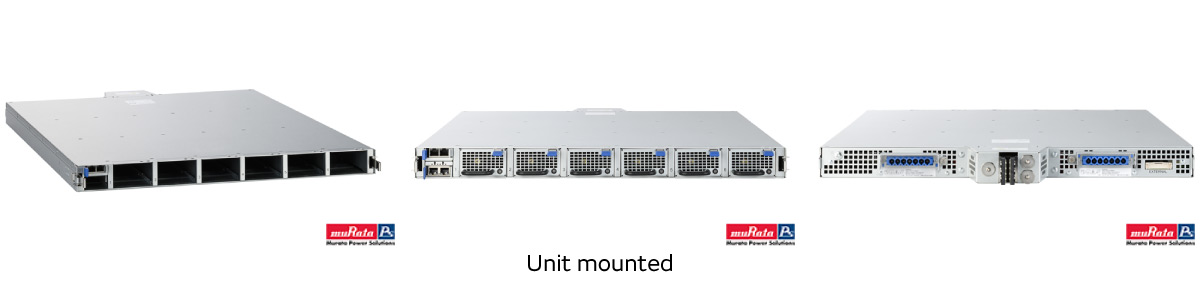 |
In Production | 50/54.5V 21.6kW |
21 inch |
V3 | 1 OU | 0 | Yes |
|
N+0/N+N | Bar Clip |
537×720×44.5 | 12.1 | 0 to 40 |
MWOCES- 191-P-C |
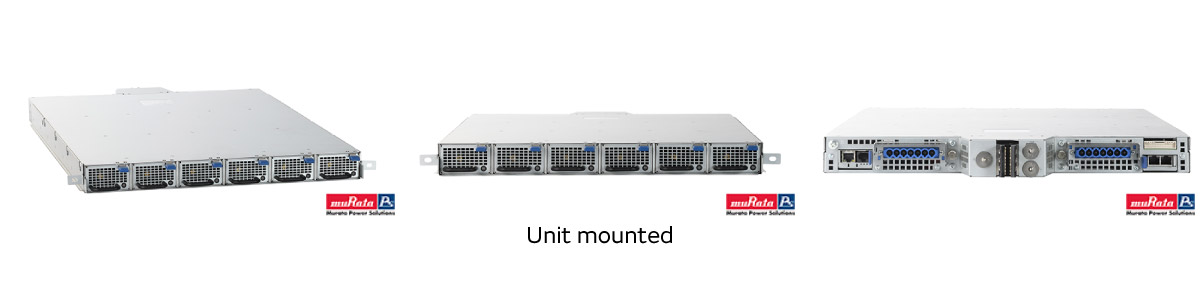 |
In Production | 50/54.5V 21.6kW |
19 inch |
— | 1 RU | 0 | Yes |
|
N+1/N+N | Bar Clip |
448.6×720×44 | 10.5 | 0 to 40 |
MWOCES- 211-P-D |
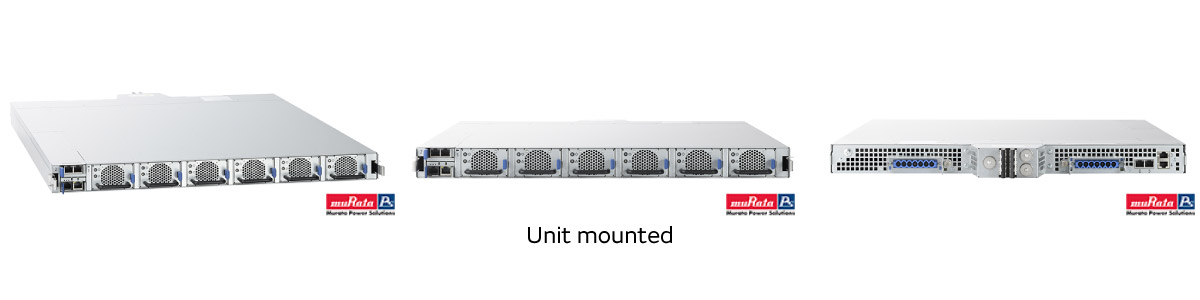 |
In Production | 50V 33kW |
21 inch |
V3 HPR |
1 OU | 0 | Yes |
|
N+0/N+N | Bar Clip |
537×720×45 | 10.7 | −5 to 45 |
MWOCES- 191-P-D |
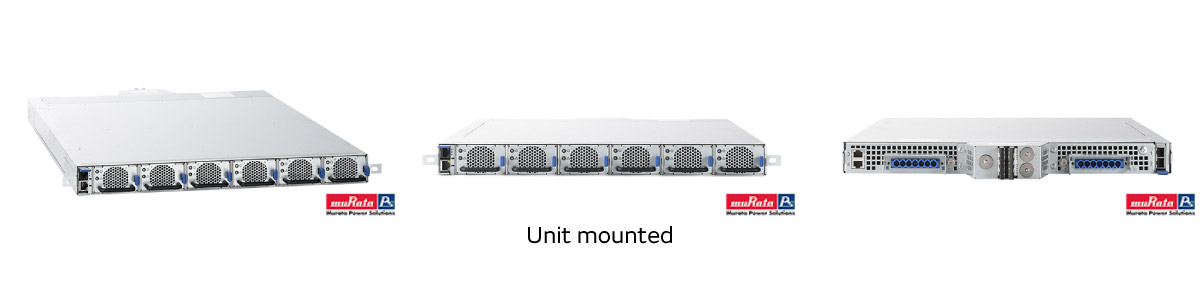 |
In Production | 50V 33kW |
19 inch |
— | 1 RU | 0 | No |
|
N+0/N+N | Bar Clip |
448×809×44.4 | 8.5 | −5 to 45 |
MWOCES- 191-M-B |
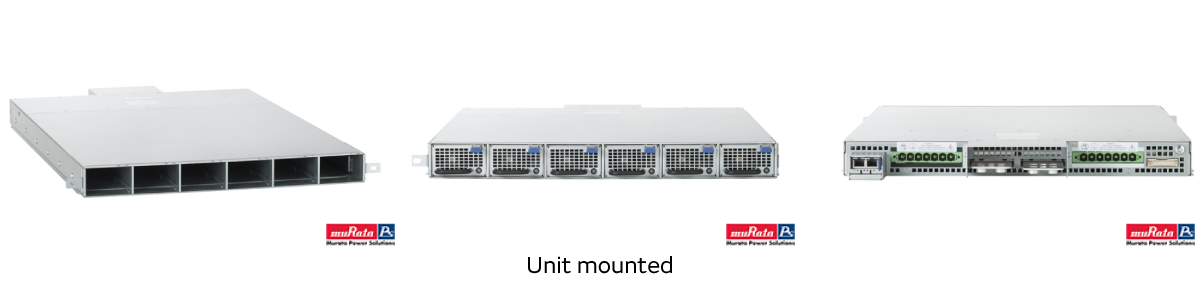 |
In Production | 50/54.5V 18kW |
19/21 inch |
V2 | 1 RU | 0 | Yes |
|
N+1/N+N | KIT | 448.6×650×45 | 8.6 | 0 to 40 |
MWOCES- 192-M |
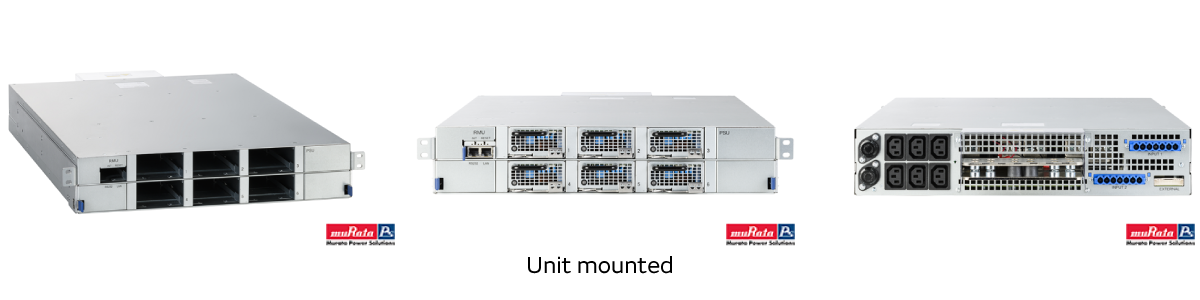 |
In Production | 12.3V 15kW |
19/21 inch |
V1, V2 |
2 RU | 6 | Yes |
|
N+1/N+N | KIT | 444×680×87 | 16.4 | 0 to 40 |
MWOCES- 192-A |
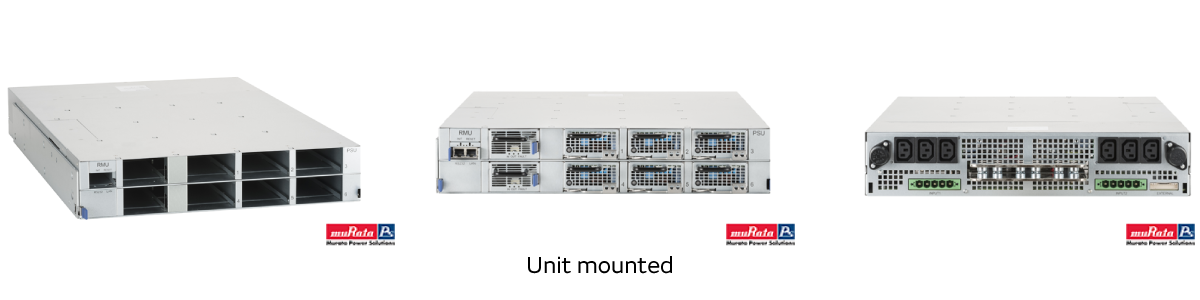 |
In Production | 12.3V 15kW |
19/21 inch |
V1, V2 |
2 RU | 6 | Yes |
|
N+1 | KIT | 444×680×87 | 16.6 | 0 to 40 |
MWOCES- 211-G |
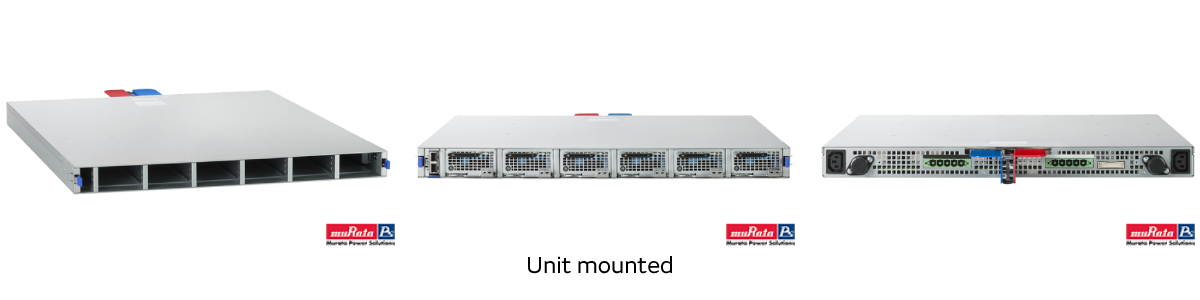 |
In Production | 12.3V 15kW |
21 inch |
V1, V2 |
1 OU | 2 | Yes |
|
N+1/N+N | KIT | 537×680×45 | 11.6 | 0 to 40 |
MWOCES- 211-F |
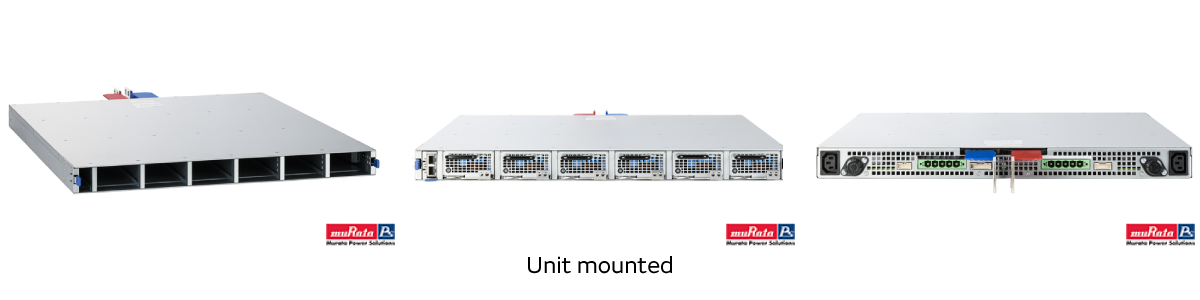 |
In Production | 12.3V 15kW |
21 inch |
V2 | 1 OU | 2 | No |
|
N+1/N+N | Direct | 537×680×45 | 11.6 | 0 to 40 |
Single input model
| Part Number | Appearance | Status | Output Voltage Power |
Applicable Rack Width |
Open Rack |
Height | Outlet Q’ty |
BBU Conn. |
Input Cfg. | Redundancy | Conn. Method |
Dim. (W×L×H mm) |
Net Weight (kg) |
Operating Temp. (°C) |
|---|---|---|---|---|---|---|---|---|---|---|---|---|---|---|
MWDCES- 191-C |
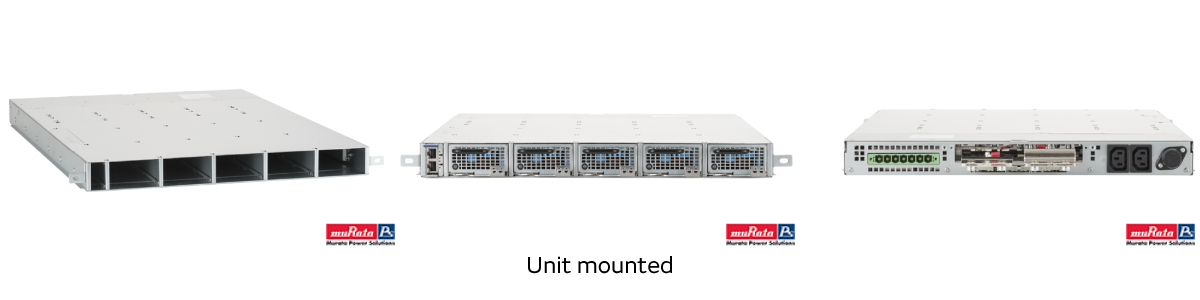 |
In Production | 12.3V 12kW |
19 inch |
— | 1 RU | 2 | Yes |
|
N+1 | KIT | 437×650×43.8 | 12.5 | 0 to 40 |
MWOCES- 211-P-C-S |
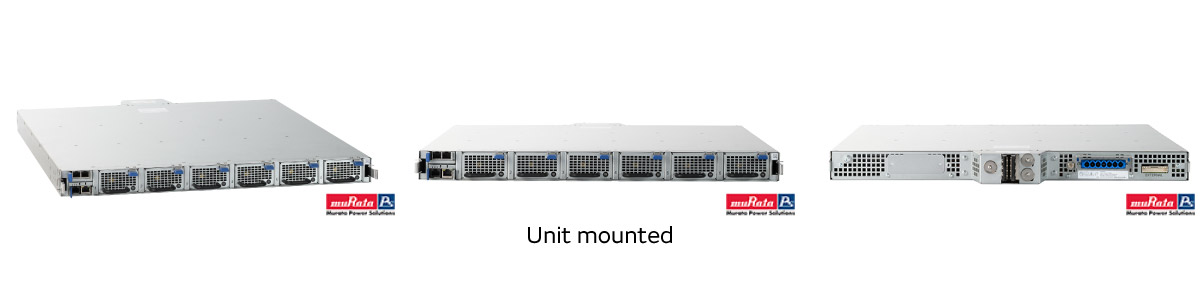 |
In Production | 50/54.5V 20.4kW |
21 inch |
V3 | 1 OU | 0 | Yes |
|
N+0 | Bar Clip |
537×720×44.5 | 12.1 | 0 to 40 |
Single-phase Immersion Cooling Ready model
| Part Number | Appearance | Status | Output Voltage Power |
Shelf Width |
Product Design |
Height | Outlet Q’ty |
BBU Conn. |
Input Cfg. | Redundancy | Conn. Method |
Dim. (W×L×H mm) |
Net Weight (kg) |
Terms of Use |
|---|---|---|---|---|---|---|---|---|---|---|---|---|---|---|
MWOCES- 213-P-C-L |
 |
In Production | 50.5/ 54.5V |
21 inch |
OCP V3 based |
3 OU | 0 | No |
|
N+1/N+N | Bar Clip |
537×788.7×131.7 | 39.0 | PoC Required* |
*Please refer to the datasheet for details.
